ASIC Miner Buying Guide 2026: Bitmain vs Goldshell vs Innosilicon vs Jasminer vs WhatsMiner
By BitcryptoMarket
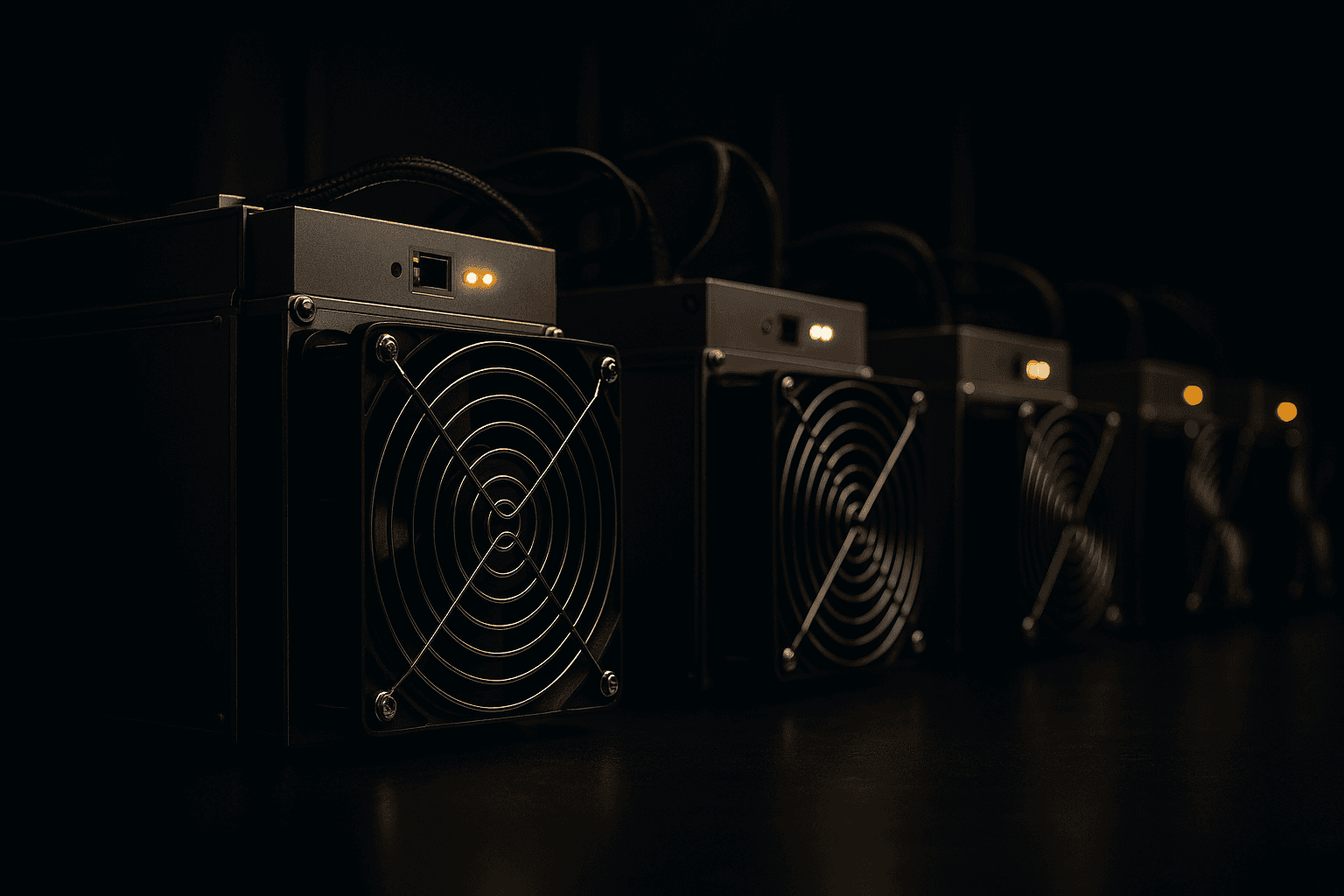
Buying an ASIC miner in 2026 is a maths problem wrapped in a hardware decision. The Bitcoin network is grinding along near record hashrate, the block reward is 3.125 BTC until the next halving around 2028, and revenue per terahash sits near cyclical lows. That doesn't mean mining is dead — it means the margin for buying the wrong machine has never been thinner. This guide compares the five brands people actually search for — Bitmain, WhatsMiner (MicroBT), Goldshell, Innosilicon and Jasminer — with real specs, real breakeven numbers, and honest warnings about the models that no longer pay for themselves.
Mining in mid-2026 at a glance
- Network hashrate: ~854 EH/s in early July 2026, after peaking around 918 EH/s in June — which triggered a rare ~9% downward difficulty adjustment.
- Block reward: 3.125 BTC (post-April-2024 halving).
- Hashprice: roughly $29 per PH/day — near the lows of the cycle. Every dollar of your electricity price matters more than ever.
- BTC price: volatile around $58,000–63,000 in early July 2026.
Translation: efficiency (joules per terahash) is the whole game. At ~$29/PH/day, an Antminer S21 XP breaks even around $0.088/kWh, an S23 Hydro around $0.124/kWh, while old S19-class machines need electricity under $0.055/kWh to make sense. If you pay typical Western residential rates (~$0.17/kWh in the US), you either need hosting or a home-heating use case — more on both below.
How to judge any ASIC in 30 seconds
- Efficiency (J/TH) — divides winners from losers. 2026 flagships hit 9.5 J/TH; anything above ~20 J/TH is a space heater with a hobby.
- Your electricity price — the breakeven numbers above decide whether to buy new, used, or not at all.
- Algorithm and coin — SHA-256 (BTC), Scrypt (LTC+DOGE merged), Ethash (ETC), KHeavyHash (KAS), Blake3 (ALPH). Some altcoin ASICs are deeply unprofitable in 2026; check before you fall for a spec sheet.
- Noise and cooling — 70–85 dB for air-cooled units (vacuum cleaner, 24/7) vs 35–50 dB for home boxes and hydro.
- Warranty and seller — new units carry ~365-day factory warranties; used units are usually as-is.
Brand deep-dives
Bitmain (Antminer) — the default choice for BTC
Bitmain still sets the pace. The Antminer S23 Hyd 3U (1,160 TH/s, 9.5 J/TH, hydro-cooled) is the only mass-production flagship under 10 J/TH and has been shipping since January 2026. The air-cooled S23 (318 TH/s, 11 J/TH) and the workhorse S21 XP (270 TH/s, 13.5 J/TH, ~$4,200–5,500 street) cover the serious-home and small-farm tiers. For Dogecoin/Litecoin, the Antminer L9 (16–17 GH/s Scrypt) has been one of 2026's most consistently profitable machines thanks to merged mining. Browse current Bitmain listings.
WhatsMiner (MicroBT) — the farm operator's brand
MicroBT's M60S (~186 TH/s air) and M66S family (270–348 TH/s immersion, down to 15.5 J/TH on the M66S++) trade a little efficiency against Bitmain for reputation of ruggedness and stable firmware. Their new M79S pushes 930 TH/s at 13.5 J/TH for rack deployments. If you're filling containers rather than a garage, WhatsMiner belongs on your shortlist — see WhatsMiner stock.
Goldshell — quiet home boxes, one big warning
Goldshell owns the "mining on a bookshelf" niche. The Mini-DOGE III (700 MH/s Scrypt at 400 W, 35 dB) merged-mines LTC+DOGE quietly enough for an apartment, and the AL-series boxes mine Alephium. The warning: Goldshell's Kadena line (KD-BOX, KD5, KD Max) is mining at a loss at typical 2026 electricity prices — KDA's price never recovered while network difficulty kept climbing. Buy KD hardware only if you have near-free power or believe in a KDA revival; otherwise stick to the Scrypt and ALPH boxes in our Goldshell range.
Jasminer & iPollo — silent Ethereum Classic specialists
Ethash didn't die with Ethereum's merge; it moved to ETC. Jasminer's X44-Q (7.8 GH/s at just 780 W, under 40 dB) is the quiet flagship, and iPollo's V1 Mini series (400 MH/s at ~232 W) is the entry point. These are among the few machines that are simultaneously apartment-friendly and profitable at moderate electricity prices. See Jasminer and all miners.
Innosilicon and the legacy brands — buy with eyes open
Innosilicon (A11 Pro Ethash, T3+ BTC) still circulates in the resale market at tempting prices, but the company's mining presence has faded: firmware updates, spare parts and support are limited. The same goes double for legacy names like Obelisk (SC1), Panda Miner and other 2018-era hardware — collector items and space heaters, not investments. Factor a dead-on-arrival risk into any used purchase and prefer sellers offering DOA guarantees.
Master comparison table (mid-2026)
| Model | Hashrate | Efficiency | Power | Algo / Coin | Cooling |
|---|---|---|---|---|---|
| Antminer S23 Hyd 3U | 1,160 TH/s | 9.5 J/TH | 11,020 W | SHA-256 / BTC | Hydro |
| Antminer S23 Hyd | 580 TH/s | 9.5 J/TH | 5,510 W | SHA-256 / BTC | Hydro |
| Antminer S23 | 318 TH/s | 11 J/TH | 3,498 W | SHA-256 / BTC | Air, 75 dB |
| Antminer S21 XP | 270 TH/s | 13.5 J/TH | 3,645 W | SHA-256 / BTC | Air |
| WhatsMiner M66S++ | 348 TH/s | 15.5 J/TH | ~5,394 W | SHA-256 / BTC | Immersion |
| WhatsMiner M60S | ~186 TH/s | 18.5 J/TH | ~3,440 W | SHA-256 / BTC | Air |
| Antminer L9 | 16–17 GH/s | 0.21 J/MH | 3,360 W | Scrypt / LTC+DOGE | Air |
| Goldshell Mini-DOGE III | 700 MH/s | 0.57 J/MH | 400 W | Scrypt / LTC+DOGE | Air, 35 dB |
| Goldshell AL Max | 8.3 TH/s | — | 3,350 W | Blake3 / ALPH | Air |
| Goldshell KD Max | 40.2 TH/s | — | 3,350 W | Kadena / KDA | ⚠ loss-making 2026 |
| IceRiver KS7 | 30 TH/s | 117 J/TH | 3,500 W | KHeavyHash / KAS | Air |
| Jasminer X44-Q | 7.8 GH/s | 0.1 J/MH | 780 W | Ethash / ETC | Air, <40 dB |
| iPollo V1 Mini SE+ | 400 MH/s | 0.58 J/MH | 232 W | Ethash / ETC | Air, quiet |
| Innosilicon A11 Pro | 1.5–2 GH/s | — | ~2,400 W | Ethash / ETC | Air, legacy support |
Live prices change with the market — check current listings in the Crypto Miners category, where every unit can be paid for in BTC or 50+ other coins.
What's still worth mining in 2026?
- Bitcoin: yes, with sub-14 J/TH hardware and electricity under ~$0.09–0.12/kWh (or hosting).
- Litecoin + Dogecoin (merged): yes — the quiet success story of 2026. One machine, two coins, same electricity.
- Ethereum Classic: yes at low power prices, especially with Jasminer/iPollo efficiency.
- Kaspa: mostly no — network hashrate outgrew price; most KAS ASICs run at a loss at typical rates.
- Kadena, Alephium: currently negative at $0.10/kWh; only for near-free power or conviction plays.
Air vs hydro vs immersion
Air is simple and cheap but loud (70–85 dB) and dumps heat where you live. Hydro (like the S23 Hyd) is quiet (~50 dB), denser and enables heat reuse — heating a workshop, greenhouse or pool with your hashrate is the closest thing to cheating the breakeven math. Immersion suits farm-scale deployments (the M66S family is built for it) with the best thermals and component life, at the cost of tank infrastructure.
Home vs hosting
A single flagship draws 3.5–11 kW continuously — a home needs a dedicated 220 V circuit, real ventilation and tolerant neighbours. Hosting facilities charge all-in rates around $0.055–0.085/kWh in 2026, handle noise/heat/uptime, and let you start mining with nothing at home but a dashboard login. Rule of thumb: home boxes (Mini-DOGE, iPollo, Jasminer) at home; everything above ~1 kW belongs in a garage, workshop or host.
New vs used, and how not to get scammed
The ASIC resale market is where most mining money is lost — not to difficulty, but to fraud. Checklist before paying anyone:
- Escrow or processor-mediated payment. Sellers who refuse both and demand a direct transfer to a personal wallet are a walk-away signal.
- Proof of life: live video of the exact unit hashing, pool dashboard screenshots, hashrate logs.
- Verifiable business: registration, real address, reachable support, consistent reviews.
- Realistic pricing: a "new S23 Hyd at 40% off" does not exist. Too cheap = fake.
- Warranty: new units carry ~1-year factory warranty (Bitmain 365 days); used units should state tested condition and a DOA window in writing.
Expect 3–5 years of physical life from a well-cooled unit, with an economic life of 2–4 years depending on where efficiency goes next.
Which miner should you buy?
- Curious beginner in an apartment: Goldshell Mini-DOGE III or iPollo V1 Mini — silent, plug-in, real coins.
- Home miner with a garage and cheap power: Antminer S21 XP (BTC) or L9 (LTC+DOGE) — the 2026 value sweet spots.
- Heat-reuse project: Antminer S23 Hyd — heat your space with 9.5 J/TH efficiency.
- Farm buyer: S23 Hyd 3U or WhatsMiner M66S++/M79S, negotiated by the pallet, hosted at <$0.08/kWh.
- ETC believer: Jasminer X44-Q — the efficiency king of Ethash.
Every machine in our miner catalog ships insured, and — fittingly — you pay in the coin you're about to mine. New to crypto checkout? Here's how it works.
Frequently asked questions
What is the best ASIC miner in 2026?
For pure efficiency, the Antminer S23 Hyd 3U (9.5 J/TH). Best air-cooled value: Antminer S21 XP. Best quiet home box: Goldshell Mini-DOGE III.
Is ASIC mining still profitable in 2026?
Yes, selectively: sub-14 J/TH BTC hardware below ~$0.09–0.12/kWh, merged LTC+DOGE mining, and efficient ETC boxes. Old S19-class and most KAS/KDA hardware are not.
How long does an ASIC miner last?
Physically 3–5 years (longer with clean, cool air or liquid cooling); economically usually 2–4 years before newer efficiency obsoletes it.
Are Goldshell miners worth it?
The Scrypt home boxes, yes — quiet and consistently profitable at moderate rates. The Kadena (KD) line is currently loss-making at typical electricity prices.
How loud is an ASIC miner?
Air-cooled farm units: 70–85 dB — not livable. Home boxes and hydro units: 35–50 dB, comparable to a fridge or quiet fan.
What electricity price do I need to mine Bitcoin profitably?
At mid-2026 hashprice (~$29/PH/day): under ~$0.088/kWh for an S21 XP, ~$0.124/kWh for an S23 Hydro. Hosting at $0.055–0.085/kWh keeps most modern machines in the green.
Can I still mine Dogecoin in 2026?
Yes — via Scrypt merged mining with Litecoin, on an Antminer L9 (serious) or Goldshell Mini-DOGE III (silent home box). One machine earns both coins simultaneously.
Should I buy a new or used ASIC?
New for warranty and efficiency; used only from sellers with escrow, proof-of-hashing and a written DOA policy — and only at prices that reflect their shorter remaining life.
Network data from public hashrate/difficulty trackers and the Hashrate Index, specs from manufacturer datasheets, as of July 2026. Mining involves real financial risk: difficulty, coin prices and electricity costs all move. Do your own numbers before buying — and if you'd like, our team can sanity-check your electricity rate against any machine in the store.
Ready to shop with crypto?
Browse 2,450+ brand-new devices and luxury goods — pay with Bitcoin, Ethereum and 50+ cryptocurrencies.
Shop the store